

- Earn up to £160/year selling surplus power back to the grid2
- Next-gen panels now 30% cheaper than five years ago3
- Government 0% VAT — hundreds saved on installation4
Solar: The Smart Financial Decision in 2026
Solar power is on track to become the second cheapest form of electricity in the UK within a few years. For most homeowners, the maths has never looked better, upfront costs are down, bills are high, and the government’s 0% VAT relief is still in place.
Many Brits assume solar won’t work on their roof. In reality, most UK homes with a south, east, or west-facing roof qualify for meaningful savings. Solar panels run on daylight, not sunshine. Even on grey November days, your panels are generating power.
The cost of solar has fallen more than 30% since 2018
Average upfront costs have dropped from over £9,600 to under £6,700 for a typical 3-bedroom installation, while grid electricity prices have risen sharply in the same period. The window for maximum return on investment is now.3
How Much Could You Save?
Select your home size to see estimated annual savings from solar panels and a battery.

- 1-2 bedrooms
- 6 panels required

- 3 bedrooms
- 10 panels required

- 4+ bedrooms
- 14 panels required
Here’s the thing about UK weather: your panels run on daylight, not sunshine. Even on a grey November morning, a properly installed system is generating electricity that would otherwise cost you full price from the grid. Cloudy skies are not the deal-breaker most people think they are.
What the maths actually looks like
Most savvy homeowners reach full payback in 7–10 years, then it’s essentially free electricity
A typical solar system lasts 25 years. That means once your panels have paid for themselves, you’ve got 15+ years of generating power at near-zero cost, while your neighbours are still paying whatever the grid charges that year.
And here’s what most people miss: as electricity prices rise, the value of what your roof generates rises with them. Your panels don’t get more expensive when wholesale energy costs go up. Your supplier’s bills do.
6 Reasons to Go Solar in 2026

Tell us about your home
Answer a few quick questions about your property, roof type, and current energy usage.

We calculate your savings
Our specialists assess your home’s solar potential and produce a personalised savings projection.

Receive your free quote
Get a no-obligation quote from the UK’s #1 solar installer — with full pricing and projected payback period.
How can I start saving with solar panels?
- Click your location on the map below
- Answer a few simple questions
- Receive your free quote!
Our Claims Explained
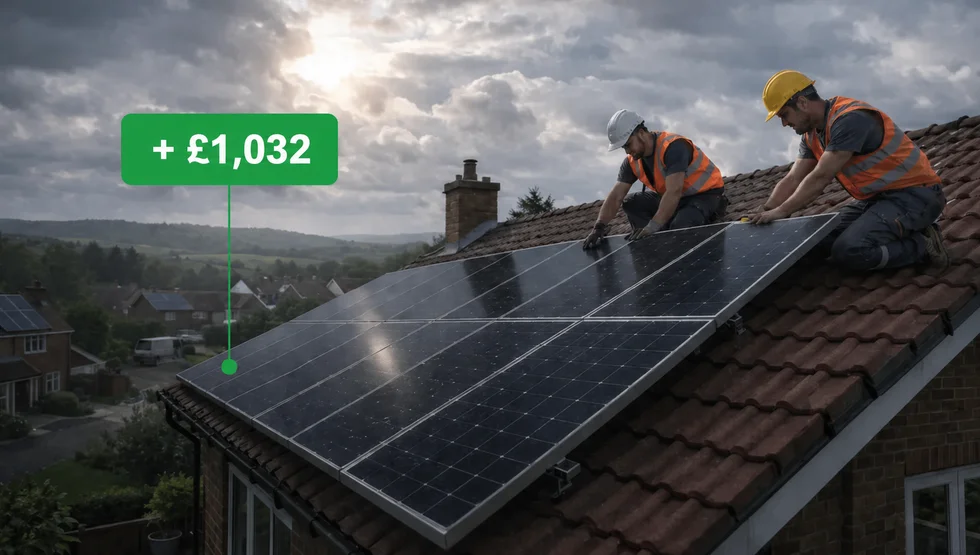
Save an Average of £1,032 in Your First Year – Updated Figure
+
Our average savings (£1,032) is our updated figure based on data collected from over 1,000 UK homeowners whose Project Solar systems had been operational for at least 12 months prior to March 2026. This figure reflects actual savings for Project Solar homes with a solar panel system and battery, configured / based on reduced energy bill costs, earnings from exporting excess energy back to the grid and savings from charging the battery during off-peak rates instead of relying on high-peak grid usage.
Save an Average of £891 in Your First Year
+
Our average saving figure (£891) is based on data collected from over 1,000 UK homeowners whose Project Solar systems had been operational for at least 12 months prior to April 2025. This figure reflects actual savings for Project Solar homes with a solar panel system and battery, configured / based on reduced energy bill costs, earnings from exporting excess energy back to the grid and savings from charging the battery during off-peak rates instead of relying on high-peak grid usage.
Our Year One Performance Guarantee
+
We guarantee your system will perform in Year One as projected in your personalised energy report. If it underperforms in its first year, we’ll cover the shortfall, giving you peace of mind from day one. This guarantee is calculated using your location, roof angle, panel orientation, battery and panel system, and seasonal sunlight expectations.
Boost Your Home’s Value with Solar
+
Multiple UK studies have shown that solar panels can increase property value. A 2024 study by Swansea University found homes with solar panels sold for 6.1%–7.1% more on average. Additionally, Rightmove’s 2023 analysis of 300,000 homes showed that improving a home’s EPC rating from a D to a C raised its value by an average of 3%, with solar often contributing to this EPC uplift. A study of over five million properties indicates a 2–3% value increase for existing homes with solar panels or heat pumps (versus like-for-like gas-heated homes) according to the Sustainable Markets Initiative, Cleantech Homes report, 2024.
99-Year Warranty for Lasting Peace of Mind
+
Project Solar panels come with a 99-year manufacturer product warranty as standard. Batteries and workmanship are covered for 10 years. This warranty structure is among the most comprehensive available for domestic solar in the UK.
Trusted by Over 50,000 UK Homeowners
+
Project Solar has operated in the UK solar market since 2011 and completed over 50,000 residential installations as of July 2025. This represents one of the longest track records in the UK residential solar sector.
As listed in Eco Experts’ “Best UK Solar Panel Installers” guide (2025 edition) and verified Trustpilot rating of 4.6/5 based on live customer reviews (as of July 2025).
Earn Money from the Power You Don’t Use
+
Project Solar customers can earn money from surplus electricity exported to the grid under the Smart Export Guarantee (SEG), a government-backed scheme requiring energy suppliers to pay for unused solar power. Homeowners with a solar system can apply to be part of the SEG programme via their energy supplier. Project Solar systems are compatible with SEG tariffs, including those offered by major energy providers like Octopus.
Please speak to your energy supplier to apply to the SEG.
Cut Your Monthly Energy Bills
+
Solar power reduces the need to buy electricity from the grid, significantly lowering monthly electricity bills, and therefore reducing the amount Project Solar customers are paying to their energy supplier. With battery storage, homeowners can maximise solar use and minimise grid reliance, preserving long-term energy savings even as market rates rise.
Lower Your Carbon Footprint with Solar
+
Each Project Solar installation reduces a household’s carbon emissions by an average of 1.2 tonnes per year (based on BEIS emissions factors). Solar systems generate renewable energy daily, reducing your need to purchase electricity produced by gas and coal-fired power stations.
Start Saving the Same Day We Install
+
Every Project Solar system is designed to begin producing power as soon as it’s installed and connected, typically within the same day, helping you reduce reliance on the grid and start saving on your electricity bills immediately.
On-Going Customer Support, Whenever You Need It
+
Project Solar’s customer support team is based in Manchester and provides ongoing assistance throughout the life of the system. Support is available for warranty claims, performance questions, and system maintenance.
Buy Now, Pay Later
+
“Buy Now, Pay Later” is a deferred payment option available through our finance partner, Tandem. No payments are required for the first 4 months. Standard monthly repayments begin after the deferred period, based on 8.9% APR, subject to credit approval.
Credit is subject to status and affordability. Available to UK residents aged 18+. Terms and conditions apply.
Failure to keep up with repayments may impact your credit rating and may make it more difficult to obtain credit in the future.
Project Solar acts as a credit broker, not a lender. Finance is provided by Tandem.
Battery Storage Is Growing Fast in Scotland
+
Battery storage is one of the fastest-growing home energy technologies in Scotland, including a growing number of battery-only installations.
DESNZ data shows over 22,000 domestic battery systems were installed across the UK in the 12 months to mid-2025. Based on MCS and RenewableUK data, Scotland typically accounts for around 10–16% of UK domestic battery installs, equating to approximately 2,200–3,500 Scottish installations during this period.
Industry data from 2025 indicates that around 20–25% of new battery installs are now standalone systems (without solar), driven by zero-VAT on batteries and the rise of smart time-of-use tariffs. This supports an estimated 550–750 battery-only installations in Scotland in the last year.
Higher Standing Charges in Scotland
+
Electricity standing charges are higher in Scotland than the UK average.
Ofgem’s January–March 2026 price cap data shows the Great Britain average electricity standing charge at 54.75p per day. Regional data indicates that Southern Scotland typically sits around 57–58p per day, with Northern Scotland higher still, due to network and distribution costs.
Standing charges are paid regardless of how much electricity you use, meaning households with higher standing charges benefit more from reducing grid reliance through solar and battery storage.
Charge Low, Avoid Peak Prices
+
Smart tariffs allow homeowners to charge batteries cheaply overnight and avoid peak electricity costs.
Tariffs such as Intelligent Octopus Go offer off-peak electricity rates of around 7p per kWh for a six-hour overnight window. By comparison, the Ofgem price cap unit rate for electricity in early 2026 is 27.69p per kWh, making the commonly referenced “28p peak rate” a fair representation of standard variable electricity costs.
Battery storage allows homeowners to store low-cost overnight energy and use it during the day, reducing exposure to peak-rate electricity.
Typical Electricity Bills in Scotland (Without Solar)
+
Electricity bills in Scotland remain high without solar or battery storage.
Under the Ofgem default tariff price cap for January–March 2026, a typical household faces combined annual energy costs of around £1,750–£1,800 per year, depending on usage and region. This equates to approximately £145–£150 per month, before accounting for regional standing charge differences or future price volatility.
Solar and battery systems are designed to reduce reliance on grid electricity, helping homeowners lower monthly bills and gain greater control over long-term energy costs.
